

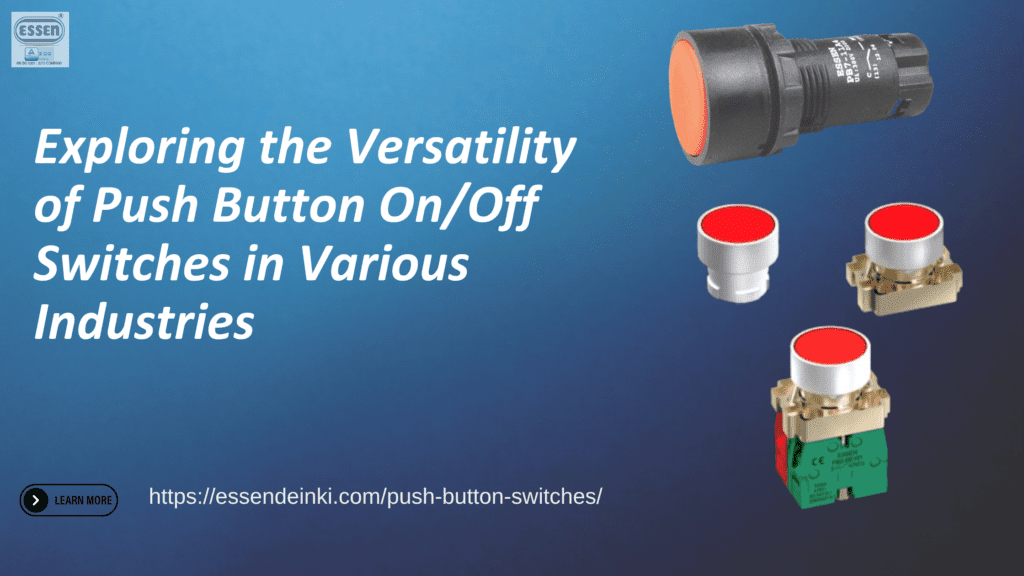
Manufacturing plants and commercial facilities rely heavily on efficient control systems to maintain smooth operations. Without reliable electrical switching solutions, managing complex machinery becomes both dangerous and inefficient. Among the most essential components driving these operations are Push Button Switches. These simple yet highly effective devices provide operators with precise control over machinery, automation systems, and general electrical circuits.
Every time an engineer starts a conveyor belt, or a technician triggers an emergency stop, they depend on industrial electrical components designed for exact actuation. This guide explains how a standard push button on/off switch functions, explores the different variations available on the market, and outlines why they remain indispensable for modern commercial applications.
What are Push Button Switches?
Push Button Switches are mechanical devices used to control an electrical circuit. By pressing the button (the actuator), the operator either completes or breaks the electrical connection. This action sends a signal to a machine or control panel, dictating a specific operational outcome.
These devices serve as the critical interface between human operators and machine control systems. You will find them everywhere from heavy-duty factory floors to everyday consumer appliances. Their robust design allows them to withstand frequent use, vibration, and exposure to harsh environmental conditions, making industrial push button switches a staple in factory automation.
How Push Button Switches Work
The internal mechanism of an electrical push button switch is remarkably straightforward. It consists of three primary components: the actuator (the part you press), the contacts, and the spring mechanism.
When you press the actuator, it compresses the internal spring and moves the contacts together (in a Normally Open configuration) or pushes them apart (in a Normally Closed configuration).
Once the operator removes pressure, the spring returns the actuator to its original resting state. The design of the contact blocks determines the electrical flow, allowing engineers to configure these automation control switches for highly specific tasks inside control cabinets and signaling stations.
Types of Push Button Switches
Choosing the correct device requires understanding the various switch types in electronics. The most common configurations include:
Momentary Push Button Switch
A momentary push button switch requires continuous pressure to keep the circuit active. As soon as the operator removes their finger, the switch springs back to its default state, breaking the connection. These are commonly used for tasks like sounding an alarm, jogging a machine, or intercom systems.
Maintained (Latching) Switches
Unlike momentary versions, maintained switches remain in their new position after being pressed. To reverse the circuit state, the operator must press the button a second time. A standard push button on/off switch for lighting circuits typically uses this latching mechanism.
Illuminated Push Button Switches
Illuminated push button switches integrate an LED or incandescent bulb inside the actuator. This lighting provides immediate visual feedback to the operator. A glowing green button might indicate that a system is actively running, while a flashing red button might alert workers to a fault.
Emergency Stop (E-Stop) Switches
E-stops are critical electrical safety switches designed to immediately halt machinery during hazardous situations. They feature large, mushroom-shaped red heads that are easy to hit in a panic. Once activated, they lock into place and require a manual twist or key to reset.
Push Button Switch Applications Across Industries
The versatility of these devices allows them to be utilized across a wide spectrum of fields. Key push button switch applications include:
Manufacturing and Automation
In heavy manufacturing, control panel switches dictate the movement of robotic arms, conveyor belts, and assembly line tools. Operators use them to start sequences, pause production for maintenance, or trigger safety protocols.
Automotive Industry
Modern vehicles rely on push buttons for everything from starting the engine to adjusting climate controls and opening automated trunks. Industrial push button switches are also heavily utilized in the factories that assemble these vehicles, ensuring safe operations around hydraulic presses and welding robots.
Healthcare and Medical Devices
Medical equipment demands absolute precision. Push buttons are used on hospital beds, diagnostic imaging machines, and patient monitoring systems. They must be highly reliable and easy to clean to maintain sterile environments.
Consumer Electronics
From kitchen appliances to gaming consoles, smaller versions of these switches provide the tactile feedback consumers expect when interacting with their daily devices.
Benefits of Using Push Button Switches
Incorporating these components into your operations offers several distinct advantages:
- Durability: High-quality durable push button switches are built to withstand millions of mechanical cycles. They resist dust, moisture, and extreme temperatures.
- Reliability: The direct mechanical connection ensures that the signal is transmitted instantly, reducing the risk of control lag in critical machine control systems.
- Ease of Use: Their ergonomic design and clear color-coding make them highly intuitive, reducing operator error during high-stress situations.
- Safety: By utilizing illuminated and emergency variants, facilities can significantly improve their safety compliance and protect their workforce.
How to Choose the Right Push Button Switch
Selecting the correct component is vital for system integrity. Consider the following factors when sourcing electrical switching solutions:
- Electrical Ratings: Ensure the switch can handle the necessary voltage and current without overheating or arcing.
- Environmental Conditions: If the switch will be exposed to water, oil, or heavy dust, look for appropriate Ingress Protection (IP) ratings.
- Actuation Type: Decide if your process requires a momentary push button switch or a maintained latching mechanism.
- Mounting Space: Evaluate the size constraints of your control panel to ensure the switch fits appropriately alongside other automation control switches.
Common Mistakes to Avoid While Selecting Switches
Even experienced buyers can make errors during procurement. One major mistake is ignoring the environmental factors of the installation site. Installing a standard indoor switch in an outdoor, washdown environment will quickly lead to electrical failure.
Another frequent error is failing to specify the correct contact configuration. Mistaking a Normally Open (NO) switch for a Normally Closed (NC) switch can completely reverse the intended operation of your machinery. Finally, overlooking the visual feedback provided by illuminated push button switches can lead to operator confusion in complex control rooms.
Future Trends in Industrial Switching Solutions
The industrial landscape is constantly evolving, and so are the components that run it. Future trends indicate a rise in smart switches that integrate directly with Industrial Internet of Things (IIoT) networks. These advanced electrical switching solutions will provide real-time data on cycle counts and wear, allowing maintenance teams to replace switches before they fail. Additionally, expect to see further miniaturization of durable push button switches without any compromise on their high electrical ratings.
Elevate Your Control Systems with Essen Deinki
When it comes to sourcing top-tier electrical components, partnering with a proven manufacturer is critical. Essen Deinki stands out as a trusted manufacturer and supplier of Push Button Switches, offering decades of engineering expertise.
Their products, including the versatile PB7 and PB2 series, are engineered for high shock resistance, compact panel integration, and global safety compliance. By choosing Essen Deinki, businesses guarantee that their control panels are equipped with highly reliable, meticulously tested components that prevent downtime. Whether you need modular designs or rugged industrial switching solutions, their extensive catalog caters to the most demanding environments.
Ready to upgrade your machine control systems? Contact Essen Deinki today to consult with their technical experts and secure the highest quality Push Button Switches for your next project.
Frequently Asked Questions (FAQs)
What are Push Button Switches used for?
Push Button Switches are mechanical devices used to control electrical circuits. Operators press them to start, stop, or manage functions in industrial machinery, control panels, commercial appliances, and complex automation systems safely and efficiently.
What is the difference between a momentary and a maintained switch?
A momentary push button switch only remains active while it is physically being pressed down. A maintained switch latches into place upon the first press and requires a second press to release the connection and stop the circuit.
Where are illuminated push button switches primarily used?
Illuminated push button switches are heavily used in control panels and signaling stations. The integrated lighting provides operators with instant visual confirmation of a machine’s status, improving safety and workflow efficiency in busy environments.
How do I select the right industrial electrical components for my panel?
You must evaluate the voltage ratings, environmental conditions (like IP ratings for dust and water resistance), contact configurations, and the required actuation type. Partnering with a reliable supplier ensures you get the right fit.
Are Push Button Switches difficult to install?
No, modern switches are designed for straightforward installation. Manufacturers like Essen Deinki offer modular Push Button Switches that allow for rapid mounting and easy wiring within standard industrial control cabinets.
Why are emergency stop switches important?
Emergency stop switches are critical electrical safety switches designed to instantly cut power to machinery during a hazard. Their prominent mushroom head design allows workers to actuate them quickly to prevent injury or equipment damage.