

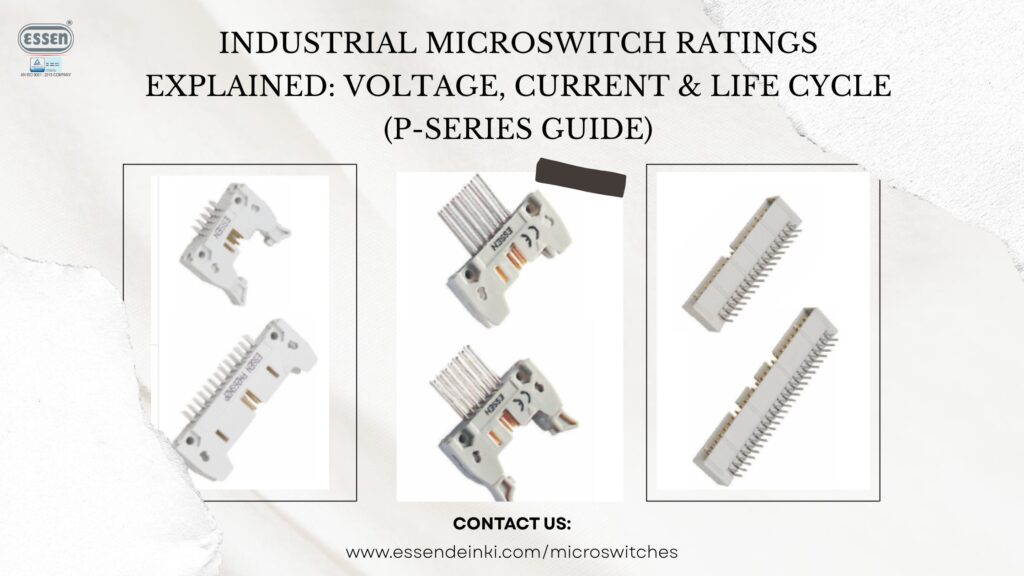
Microswitches may be small components, but they play a critical role in modern electrical and industrial systems. From home appliances to automated machinery, these switches ensure fast, reliable, and safe operation through their snap-action mechanism.
However, selecting the wrong microswitch can lead to overheating, system failure, or even safety hazards. That’s why understanding key specifications like voltage, current, and life cycle is essential before making a purchase.
In this guide, we’ll simplify these concepts using the P-Series microswitch range so you can make the right decision with confidence.
Why Choosing the Right Microswitch Supplier Matters
In India’s competitive electrical market, low-cost components are easy to find—but quality is not always guaranteed.
A trusted supplier like Essen Deinki ensures that every microswitch is built for durability, tested for real-world conditions, and designed to handle voltage fluctuations common in Indian systems. This directly improves safety, performance, and long-term reliability.
Understanding Microswitch Ratings: Voltage and Current
When you see a label like 15A 250V microswitch, it defines the safe operating limits of the switch.
Microswitch Voltage Rating
The voltage rating indicates the maximum voltage the switch can safely handle. If the rating is lower than your system voltage, it can cause sparking or insulation failure.
In India, most applications run on 230V or 415V, so choosing the correct voltage rating is essential for safe operation.
Current Rating and Load Type
The current rating tells you how much electrical current the switch can carry. This becomes especially important when dealing with different types of loads.
Resistive loads such as heaters draw a stable current, while inductive loads like motors require a higher starting current. Because of this surge, industrial applications often need switches with higher current ratings to prevent damage.
Electrical Life vs Mechanical Life
One of the most important factors in microswitch selection is understanding the difference between electrical life and mechanical life.
Mechanical life refers to how many times a switch can operate without any electrical load. High-quality microswitches can exceed 10 million cycles, showing strong internal construction.
Electrical life, however, measures performance under actual working conditions. Since each operation creates a small arc, contact wear is unavoidable. A typical 15A 250V microswitch may last between 100,000 and 500,000 cycles depending on the load.
Choosing a higher-rated switch than required helps extend its overall lifespan.
Key Features of P-Series Microswitches
The P-Series is designed for industrial-grade performance and long-term reliability. It offers strong insulation, precise operation, and compatibility with different mechanical setups.
Key highlights:
- Durable and high-quality housing
- Multiple actuator options for flexibility
- Standard design for easy installation
Common Applications of Microswitches
Microswitches are used in both industrial systems and everyday appliances.
In industrial environments, they are commonly found in safety interlocks, conveyor systems, and level detection setups. In daily-use appliances, they are used in washing machines, microwave ovens, and HVAC systems to control essential operations.
Importance of Industrial Safety Standards
Using certified microswitches is essential for safety and compliance.
Standards like IEC 60947-5-1 ensure that the switch is tested for insulation strength, heat resistance, and safe operation under load. This reduces the risk of electrical failure and improves system reliability.
Conclusion: Choosing the Right Microswitch
Choosing the right microswitch is not just about matching specifications—it’s about ensuring long-term safety and performance.
Understanding voltage ratings, current capacity, and life cycle differences helps you avoid costly mistakes. Investing in high-quality components like the P-Series ensures better durability and reduced maintenance over time.
Get Expert Support from Essen Deinki
If you’re looking for reliable microswitches for industrial or commercial use, Essen Deinki offers trusted solutions across India. Their team can help you select the right product based on your application and load requirements.
Explore the P-Series: https://essendeinki.com/p-series/
Contact their team for expert consultation.
Frequently Asked Questions
Q1. Can I use a DC-rated microswitch for an AC application?
Generally, AC and DC ratings are different because DC arcs are harder to extinguish. You should always check the specific switch rating explained on the P-Series datasheet. Many Microswitches have different Ampere ratings for AC vs. DC.
Q2. What causes a microswitch to fail prematurely?
The most common causes are exceeding the microswitch voltage rating, physical misalignment of the actuator, or using a switch in an environment with excessive moisture or dust without proper sealing.
Q3. Does Essen Deinki provide bulk discounts for schools or clubs?
Yes! Essen Deinki caters to all commercial sectors in India. Whether you are a school building a robotics lab or a club maintaining facilities, you can contact them for volume-based pricing.
Q4. How do I choose between different actuators in the P-Series?
The choice depends on the “operating force” and the movement of your machine. A pin plunger is great for short, direct strokes, while a roller lever is better for cam-operated movements to reduce friction and improve microswitch durability.