

In today’s industrial world, a single connection point can determine the efficiency of an entire production line.
From robotic arms in automotive plants to complex control grids in power stations, reliable power and data transmission are critical. Choosing the right Electrical Connector Types ensures your systems run smoothly, safely, and efficiently.
At Essen Deinki, we’ve spent decades engineering high-performance connectivity solutions designed specifically for demanding industrial environments — because in industry, “good enough” is never enough.
What Are Industrial Electrical Connectors?
An electrical connector is a device used to join electrical circuits together. But in industrial applications, connectors do much more than just carry current.
They provide:
- Mechanical stability
- Environmental protection
- EMI shielding
- Modular design for easy maintenance
- Long operational lifespan
Different Electrical Connector Types are designed to handle everything from low-voltage sensor signals to high-current power supply lines.
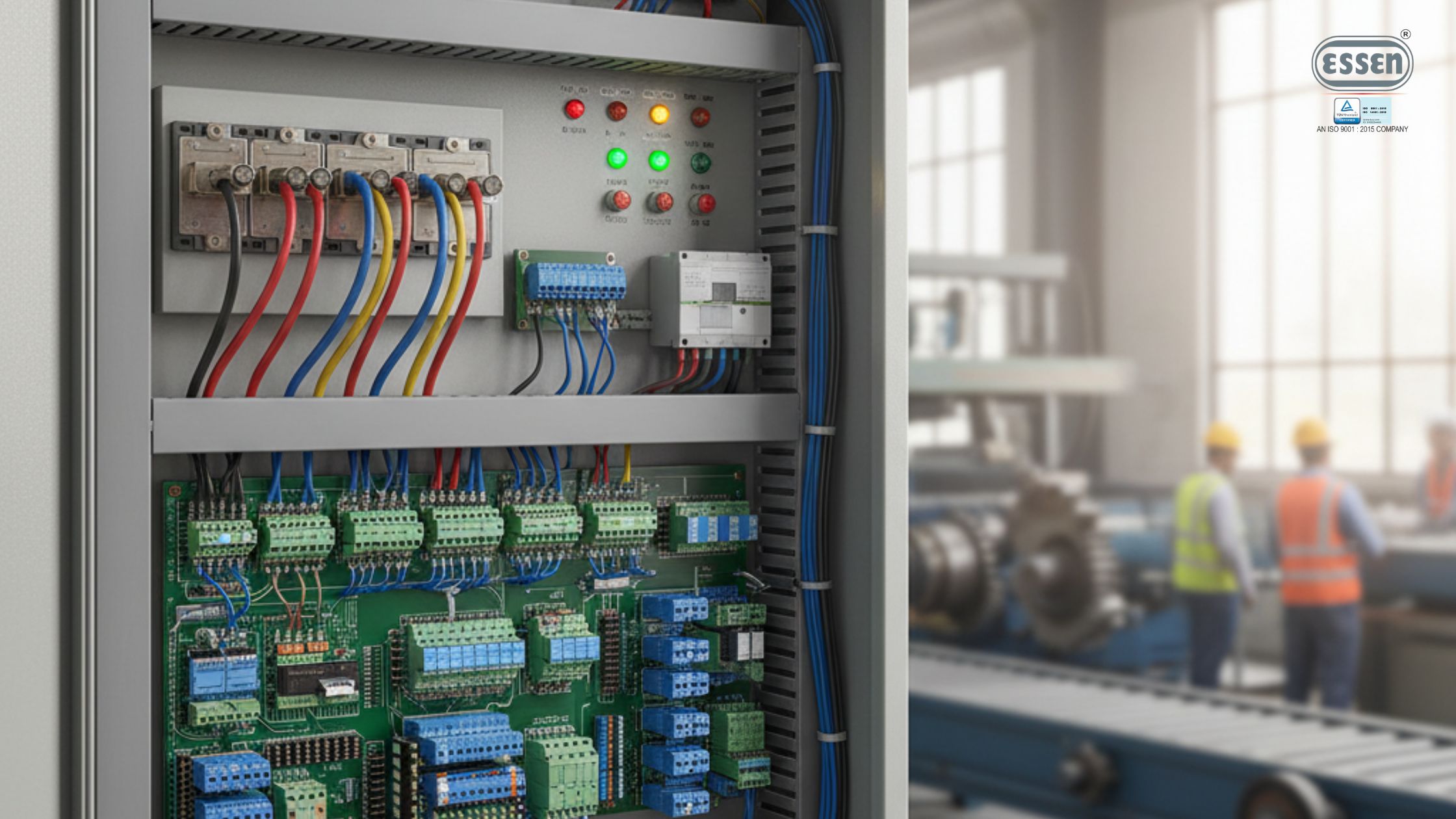
Why Connector Quality Matters
Low-quality connectors are one of the most common causes of:
- Signal loss
- Intermittent faults
- Equipment downtime
- Overheating
High-grade connectors — like those engineered by Essen Deinki — use gold, silver, or tin-plated contacts to ensure:
- Low contact resistance
- Corrosion resistance
- Long mating cycle life
- Stable performance in harsh environments
Major Industrial Electrical Connector Types
Let’s explore the most commonly used connector types in modern industrial systems.
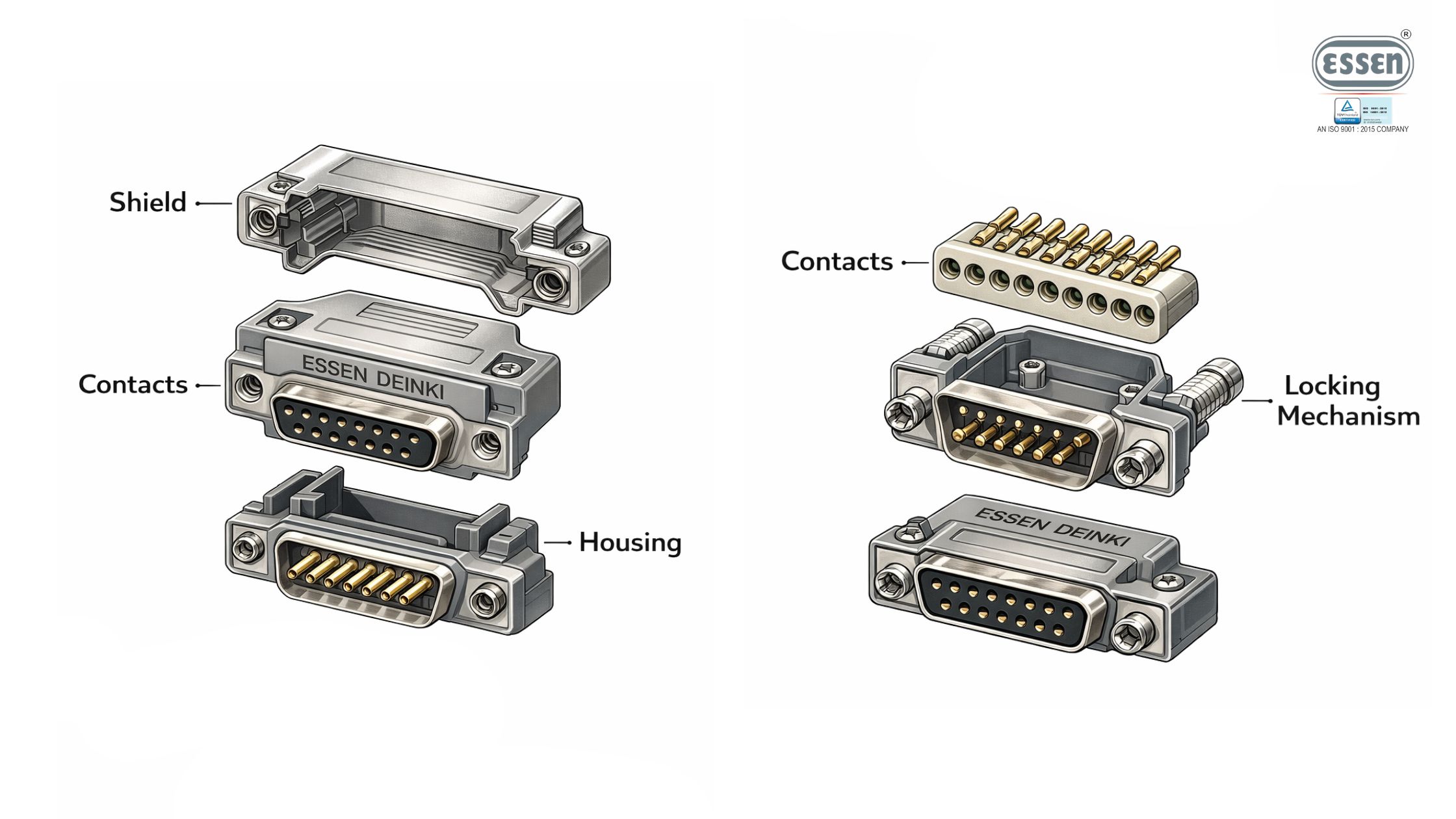
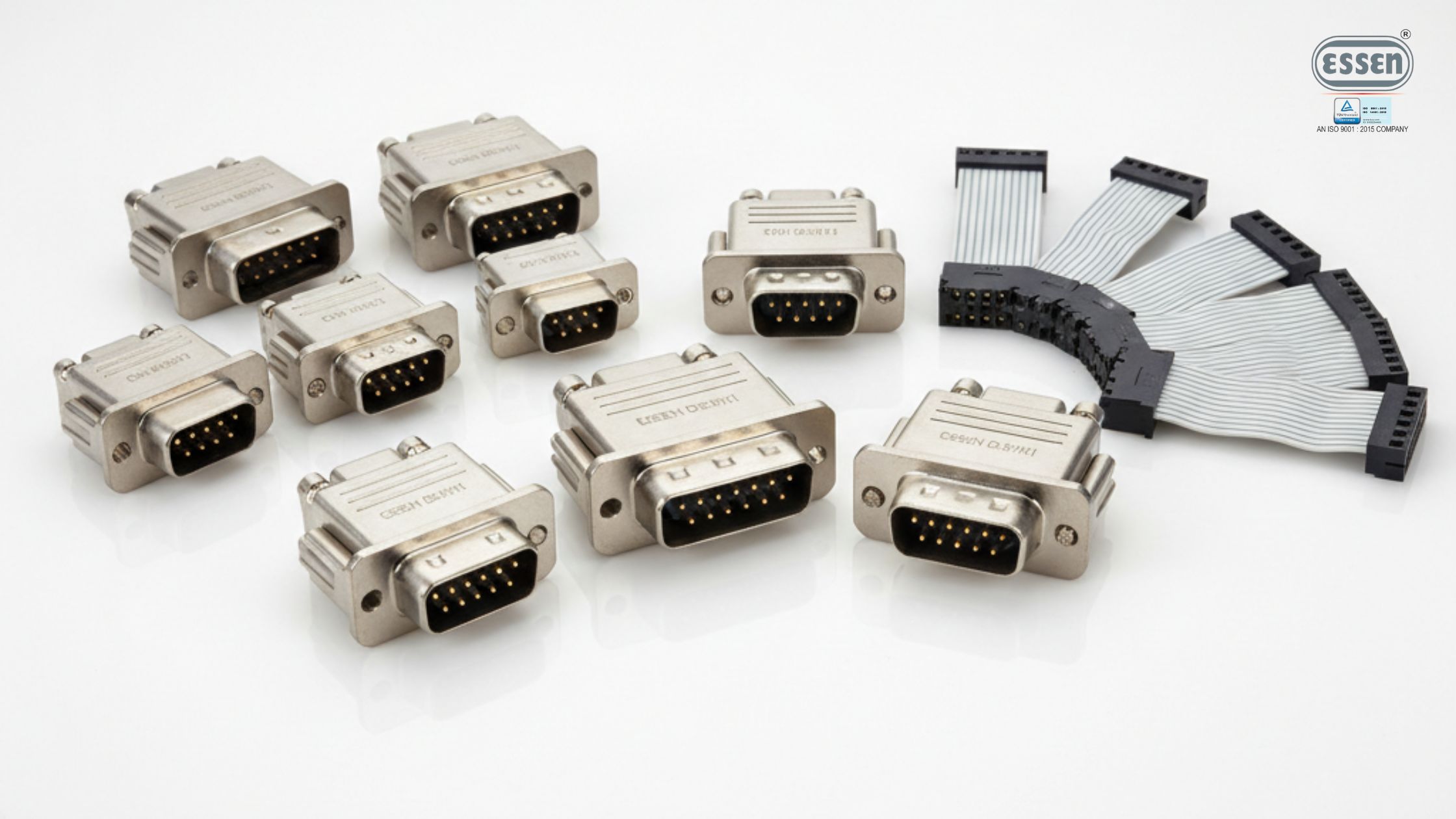
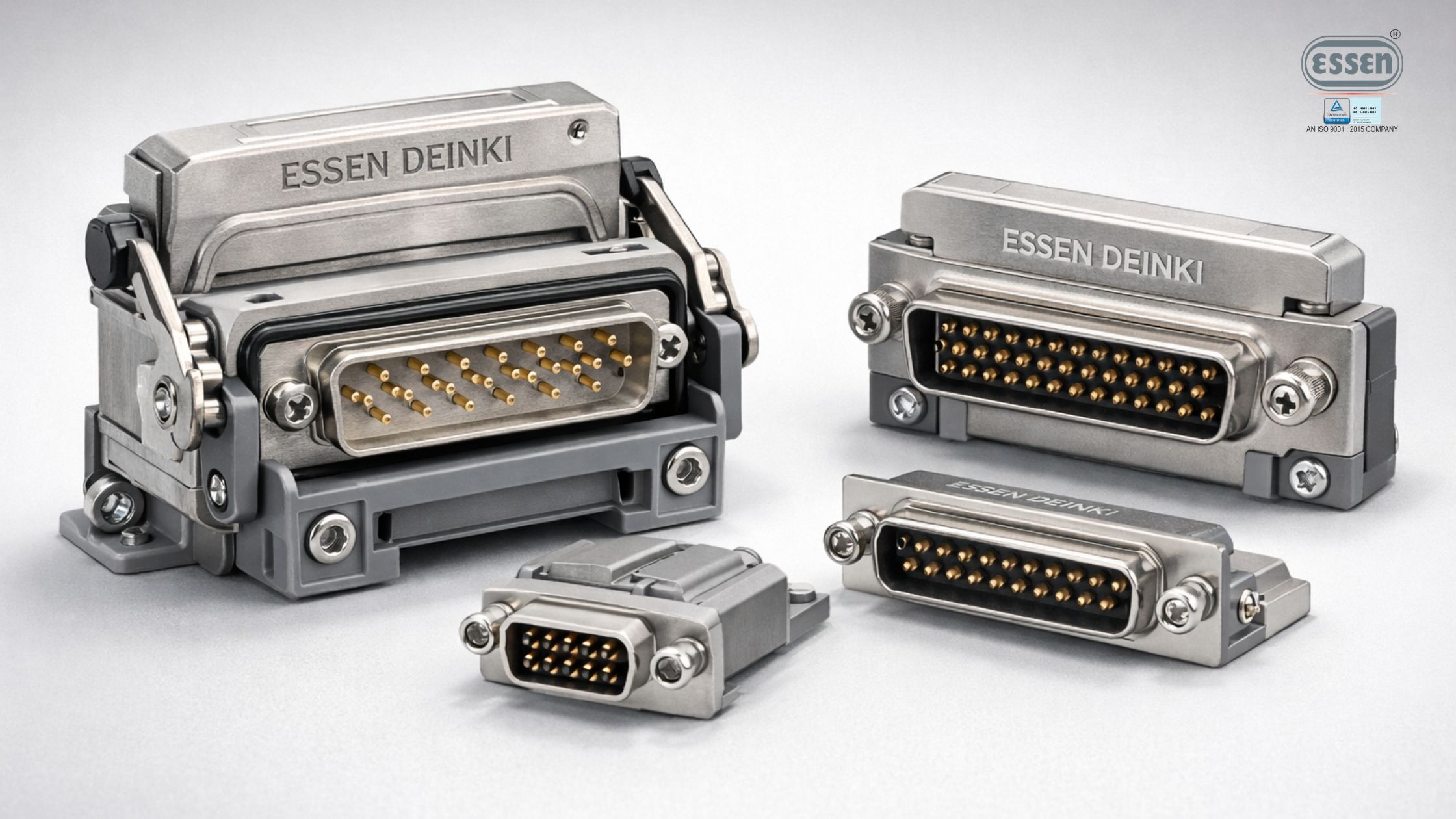
D-Subminiature (D-Sub) Connectors
Recognizable by their D-shaped metal shield, D-Sub connectors are widely used for industrial communication.
Applications:
- RS-232 communication ports
- RS-485 systems
- PLC connections
- Industrial PCs
The metal shield ensures proper orientation and protects against electromagnetic interference (EMI).
Essen Advantage:
Our C-Series D-Sub connectors feature an 8.1mm footprint and UL 94 V-0 flame-retardant housing, ideal for compact and safety-critical applications.
PCB Terminal Blocks (Plug-in & Fixed)
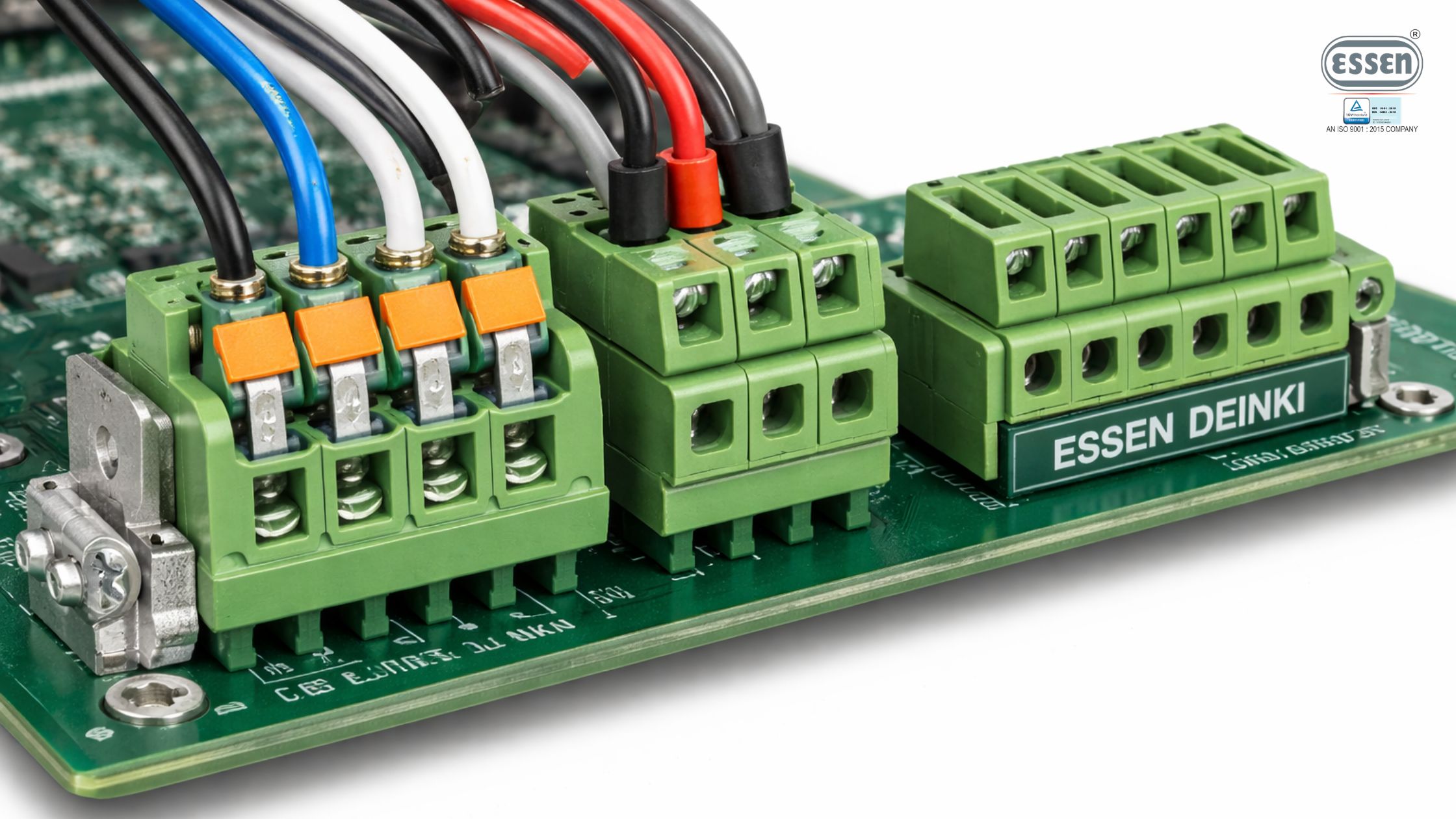
Terminal blocks are essential for wire-to-board connections in industrial electronics.
Common Uses:
- Power supply units
- Motor controllers
- I/O modules
- Control panels
Our 881 Series offers a 5.0mm pitch with plug-in functionality, allowing technicians to pre-wire harnesses and connect them quickly — reducing installation time and human error.
Box Headers & IDC Sockets
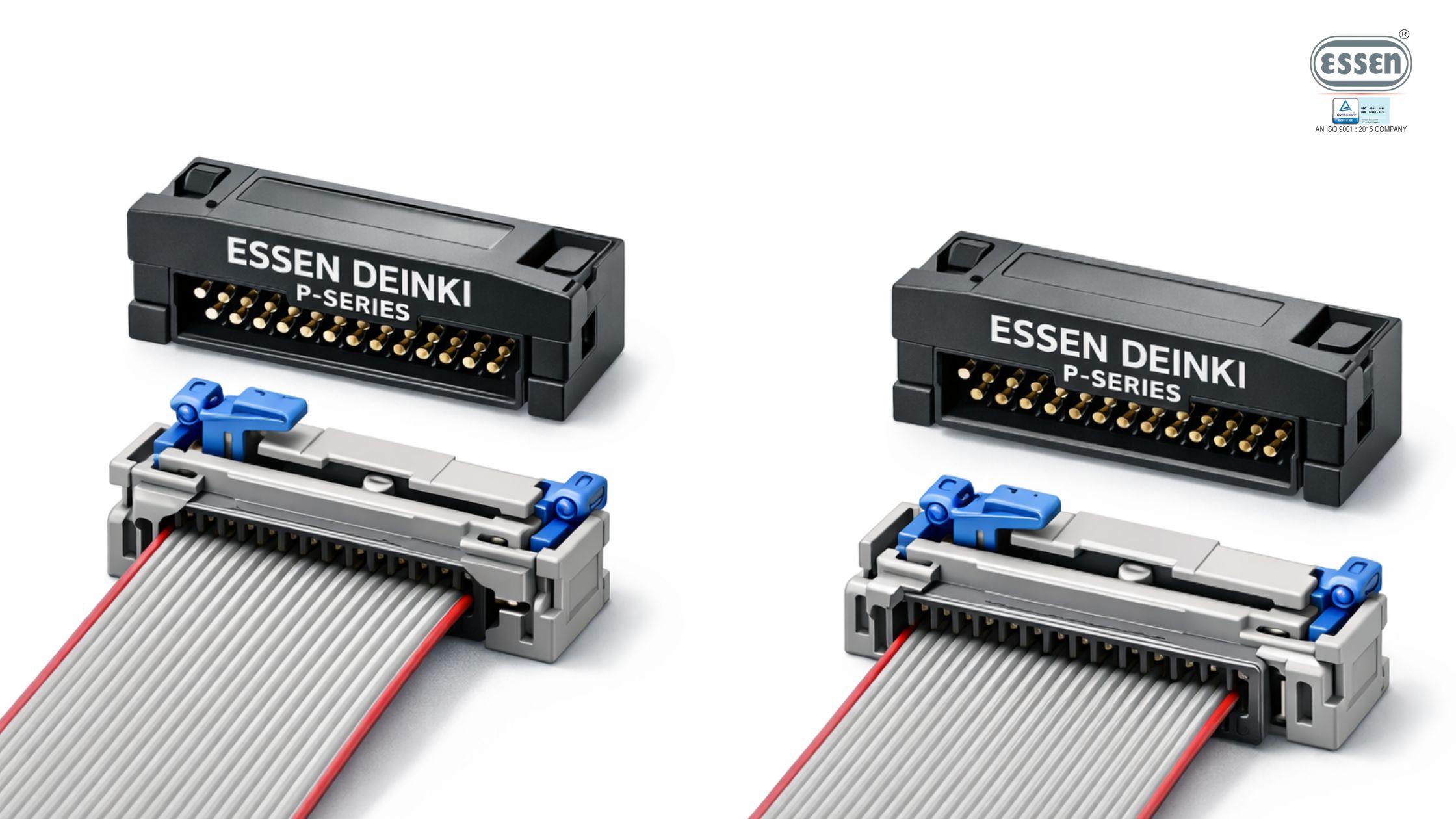
IDC (Insulation Displacement Contact) connectors allow fast termination of flat ribbon cables without stripping insulation.
Applications:
- Internal board-to-board connections
- CNC machinery
- Medical equipment
- Industrial automation systems
Our P-Series IDC headers feature strong latching systems that prevent disconnection due to vibration.
Heavy-Duty Rectangular Connectors
For rugged industrial environments where equipment is moved frequently, heavy-duty rectangular connectors provide:
- Lever locking mechanisms
- High vibration resistance
- Oil, dust, and water protection
- Long service life
These are ideal for manufacturing plants and modular automation setups.
Electrical Connector Selection Guide for Control Panels
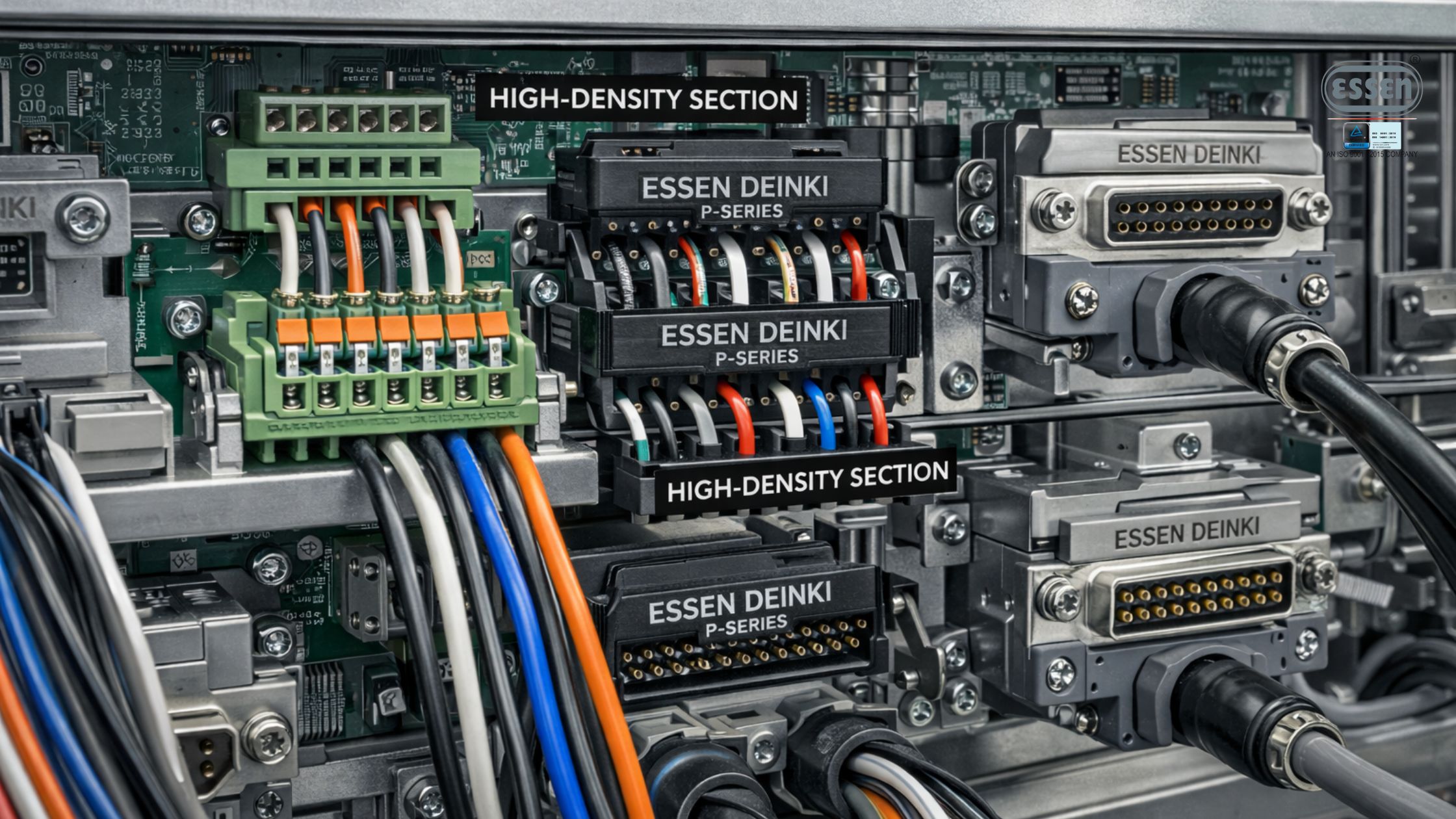
Designing an industrial control panel requires careful connector selection. Space is limited, and thermal management is critical.
Here’s what to consider:
Current & Voltage Rating
Never underspecify. Underrated connectors can overheat and create safety hazards.
Pitch & Density
Smaller pitch (2.54mm or 3.81mm) allows higher density in compact panels.
Larger pitch (5.08mm or above) is better for higher voltage applications.
Environmental Protection
If exposed to oil, coolant, or dust, choose connectors with appropriate IP ratings.
Termination Method
- Screw Terminals: Ideal for field maintenance.
- Crimp Terminals: Best for high-volume manufacturing and vibration-heavy environments.
Low Voltage Electrical Connector Applications in Automation
With the rise of smart factories and Industry 4.0, low-voltage connectors are more important than ever.
They are used for:
- Proximity sensors
- Encoders
- Vision systems
- Signal processing modules
In these applications, signal integrity is crucial. Even minor noise interference can cause misalignment in robotic systems, leading to production errors.
Essen Deinki’s precision connectors are designed for:
- High insulation resistance
- Minimal signal leakage
- Stable low-voltage performance
Electrical Connection Systems for the Automation Industry
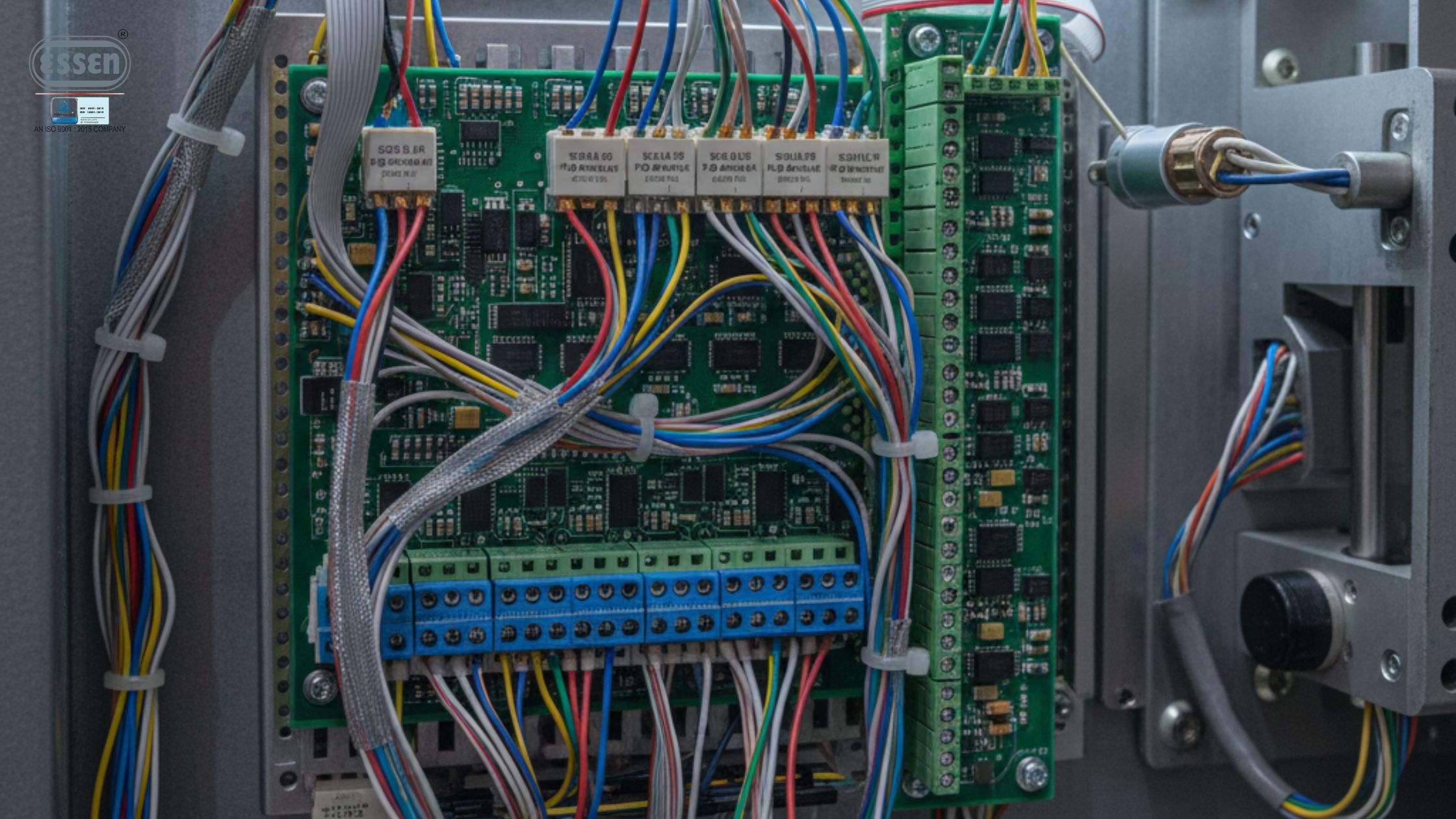
Modern automation requires more than simple plug-and-play components.
Today’s systems demand:
- Modularity
- High-speed data support
- Vibration resistance
- 24/7 reliability
Our connectors are tested to IEC 1058-1 standards to ensure they withstand repetitive industrial stresses.
From P-Series headers to specialized industrial connectors, Essen Deinki provides the backbone for advanced automation systems.
The Science Behind Connector Performance
The internal materials of a connector directly affect its durability and performance.
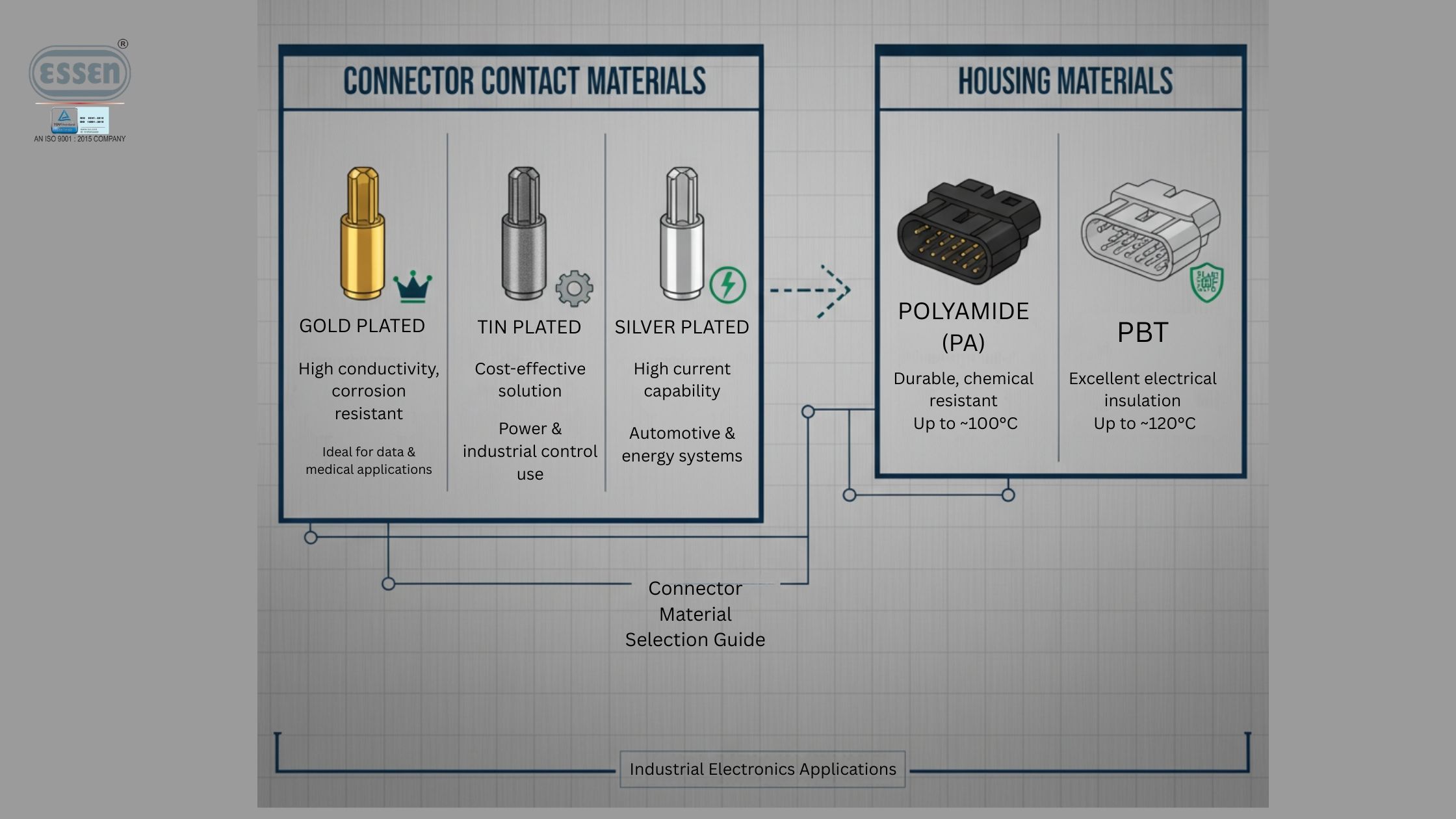
Contact Materials
- Phosphor Bronze: Excellent spring retention and conductivity
- Brass: Durable and cost-effective
Plating Options
- Gold Plating: Best for low-voltage signals (prevents oxidation)
- Silver Plating: Ideal for high current applications
- Tin Plating: Economical option for general use
Housing Materials
We use high-temperature Polyamide and PBT plastics that are:
- Flame-retardant
- Self-extinguishing
- Mechanically strong
Why Choose Essen Deinki?
Since 1958, Essen Deinki has been a trusted manufacturer of industrial connectivity solutions.
We offer:
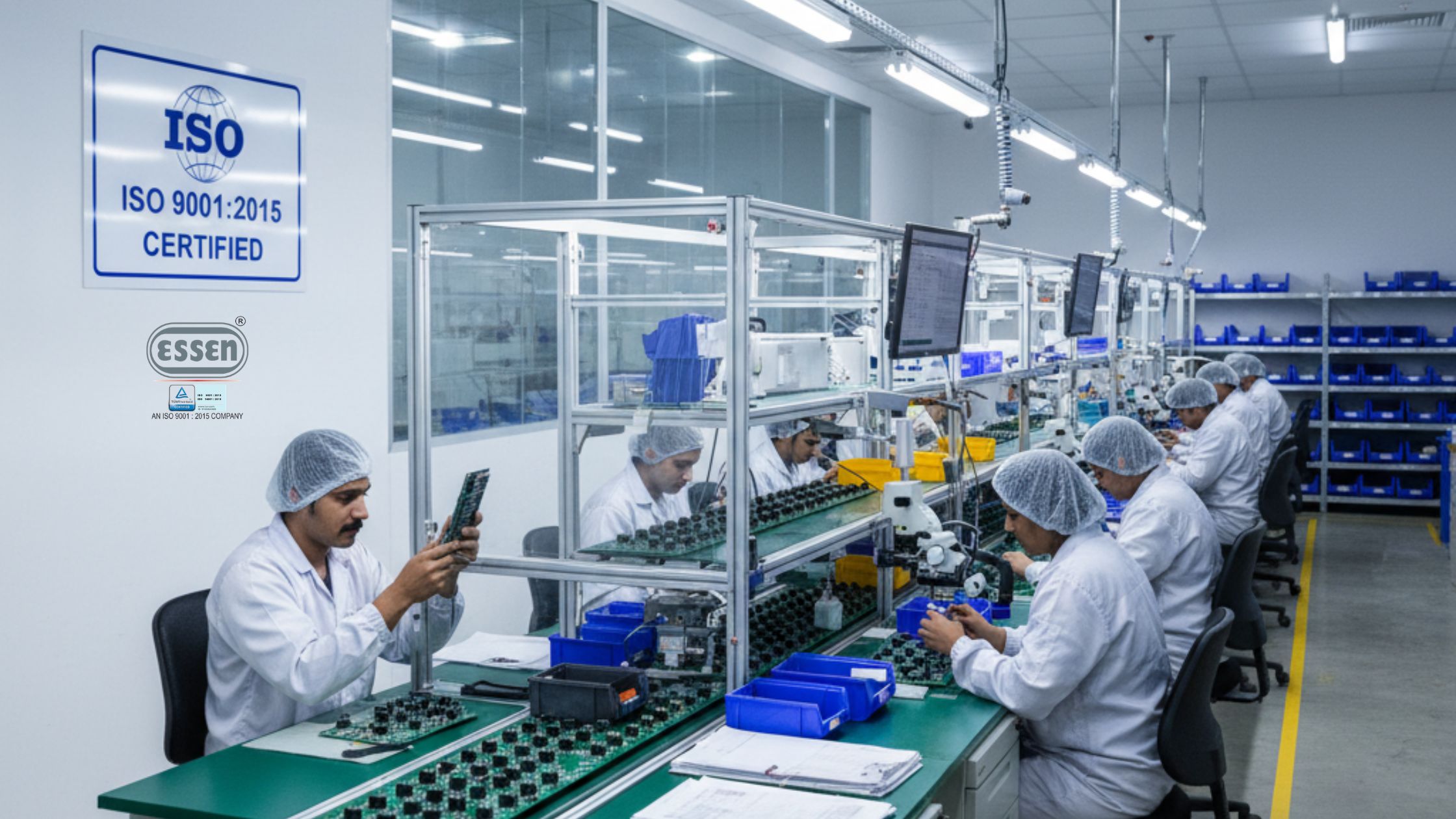
- ISO-certified manufacturing
- In-house testing facilities
- Custom connector development
- Global compliance standards
- Long-term reliability
We don’t just supply components — we provide complete Electrical Connector Solutions for Industrial Equipment.
Frequently Asked Questions
Q1: Which connectors are best for high-vibration environments?
Choose connectors with positive locking systems such as latched IDC headers or screw-down D-Sub connectors. Crimp terminations also perform better under vibration.
Q2: What does pitch mean in connectors?
Pitch refers to the distance between adjacent pins. Smaller pitch allows compact designs, while larger pitch supports higher voltage.
Q3: Do you provide connectors for custom PCB applications?
Yes. We offer terminal blocks, headers, and sockets suitable for low-voltage and custom PCB designs.
Q4: Are your connectors internationally compliant?
Yes. Our products are tested according to IEC standards and meet global safety requirements.
Q5: Why is contact resistance important?
High contact resistance causes voltage drops and heat generation, which may lead to equipment failure. High-quality plating minimizes this risk.
Conclusion: Build Reliable Industrial Systems
Understanding different Electrical Connector Types helps you design systems that are:
- More reliable
- Easier to maintain
- Energy efficient
- Future-ready
Industrial connectivity doesn’t need to be complicated — it just needs to be engineered correctly.
At Essen Deinki, we are proud to power thousands of industrial applications worldwide.
If you’re looking for reliable Electrical Connector Solutions for Industrial Equipment, our team is ready to help.
Contact us today to discuss your project or request our product catalog.