

Choosing the right limit switches is essential for any industrial setup where safety, precision, and durability matter. In real-world environments like automotive plants in Chennai or textile units in Ludhiana, machines are constantly exposed to oil, coolant, and dust.
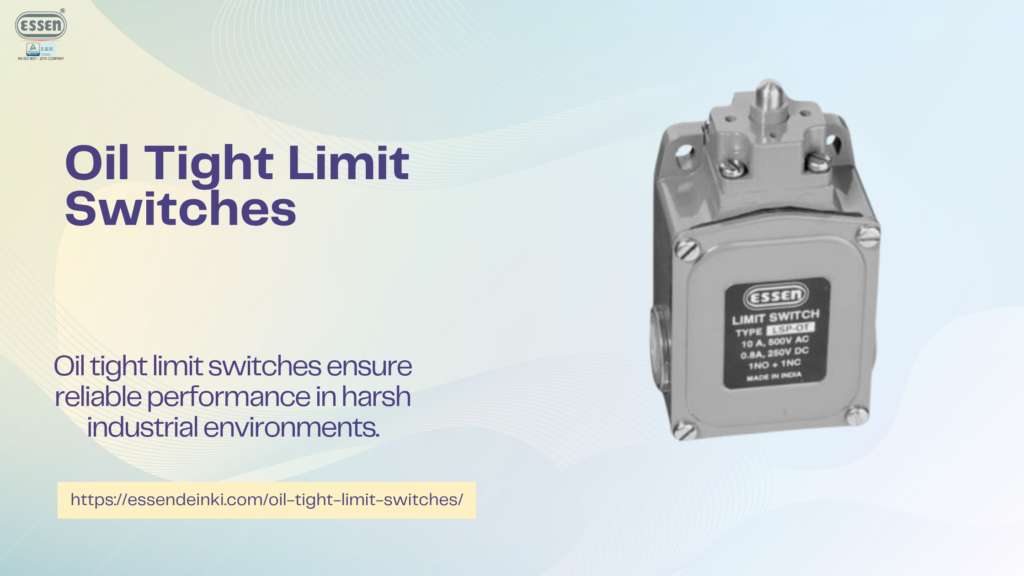
In such conditions, standard switches often fail. This is where an oil tight limit switch in India becomes critical. These switches are specially designed to resist harsh industrial fluids and prevent internal damage.
In this guide, we’ll explain their features, benefits, and why they are a must-have for modern industrial applications.
Why Standard Limit Switches Fail in Industrial Environments
In ideal conditions, electrical components remain clean and dry. However, industrial environments are far from ideal.
When standard limit switches are exposed to oil or moisture, contaminants slowly enter the internal contact system. Over time, this leads to performance issues and failures.
Common problems include:
- Contact damage due to carbon buildup
- Actuator sticking because of residue
- Short circuits caused by moisture
To avoid these issues, industries rely on sealed limit switches that protect internal components from external exposure.
Key Features of Oil Tight Limit Switches
When selecting a heavy duty limit switch, certain features define its quality and reliability. High-performance switches, like those from Essen Deinki, are designed specifically for harsh environments.
Robust Sealing System
Oil-tight switches use high-quality gaskets at all entry points. This prevents oil, water, and dust from entering the switch body and damaging internal components.
High IP Ratings
An IP rated limit switch ensures protection against both liquids and dust. Ratings like IP65 or IP67 indicate strong resistance, making the switch suitable for industrial use across India.
Strong Metal Housing
Unlike basic plastic switches, heavy-duty variants use die-cast aluminum housing. This improves strength, heat resistance, and durability in tough working conditions.
Flexible Actuator Options
These switches come with different actuator types such as plunger, roller lever, and adjustable rods. This allows easy integration into various machines without compromising sealing.
Why Choosing the Right Supplier Matters
Selecting a trusted manufacturer is just as important as choosing the right product.
A professional brand like Essen Deinki ensures that every switch is tested for performance, durability, and safety. Their products are designed specifically for Indian industrial conditions, including voltage fluctuations and dusty environments.
With a reliable supplier, you get consistent quality, better lifespan, and reduced maintenance issues.
Benefits of Using Sealed Limit Switches
Upgrading to oil-tight limit switches offers several long-term advantages.
- Reduced downtime due to fewer failures
- Improved safety in critical applications
- Lower maintenance and replacement costs
- Reliable performance in oil, dust, and moisture
Although the initial cost may be higher, these switches provide better value over time due to their durability.
Applications Across Industries
Oil-tight limit switches are used in a wide range of sectors where environmental protection is required.
In manufacturing, they are commonly used in CNC machines, lathes, and conveyor systems where oil exposure is constant. In commercial setups like kitchens or food processing units, they handle steam and grease effectively.
They are also useful in outdoor applications such as elevators, gate systems, and pool equipment, where resistance to water and dust is essential.
Importance of Safety Standards
Industrial environments demand high safety standards. Using certified limit switches ensures reliable performance and reduces risk.
Standards like IEC 60947-5-1 guarantee that the switch has been tested for insulation strength, heat resistance, and safe operation under load.
This not only protects machinery but also ensures worker safety.
Conclusion: Why Oil Tight Limit Switches Matter
In industrial automation, limit switches play a key role in controlling and protecting machinery. Choosing an oil-tight variant ensures that your system continues to operate smoothly, even in harsh conditions.
By focusing on proper sealing, strong housing, and certified standards, you can significantly improve the efficiency and safety of your operations.
Investing in high-quality switches is not just a technical decision—it’s a long-term investment in reliability.
Get Expert Support from Essen Deinki
If you’re looking for reliable oil-tight limit switches, Essen Deinki offers a wide range of solutions for industrial and commercial use.
Their team provides expert guidance to help you select the right switch based on your application and environment.
Explore the range: https://essendeinki.com/oil-tight-limit-switches/
Contact their team for expert consultation and best pricing.
Frequently Asked Question
Q1. Is an oil-tight switch the same as waterproof?
Not exactly. Oil-tight switches resist oil and chemicals, while waterproof switches are designed mainly for water. However, many oil-tight switches also offer water and dust protection.
Q2. Which IP rating is best for industrial use?
IP65 or higher is recommended for most industrial environments in India.
Q3. Why are limit switches important for safety?
They act as safety controls to prevent machine over-travel and potential damage or accidents.
Q4. Can these switches be used outdoors?
Yes, oil-tight limit switches are suitable for outdoor use, as they resist moisture, dust, and environmental exposure.