

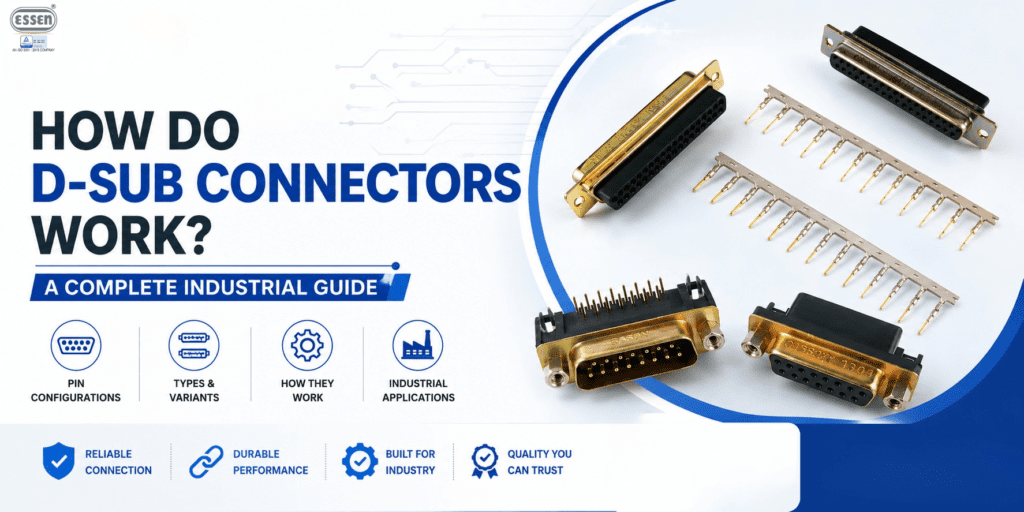
D-Sub Connectors work by establishing a secure electrical connection between two devices using a specialized pin-and-socket mechanism. The male connector contains metal pins that slide into the female connector’s corresponding sockets. A distinctive D-shaped metal shield surrounds these pins, ensuring correct alignment, providing mechanical support, and protecting the signal transmission from harmful electromagnetic interference (EMI).
Modern industrial facilities constantly upgrade their technology, yet one component remains an absolute staple in control panels and electronic equipment. Despite the rapid evolution of modern connector technologies, D-Sub Connectors continue to be one of the most trusted connectivity solutions worldwide. These highly reliable components form the backbone of industrial automation and communication systems.
Understanding how these connectors function helps engineers and procurement managers make better hardware decisions. Let us explore the mechanics, applications, and benefits of these vital industrial connector solutions.
What Are D-Sub Connectors and Why Are They Still Popular?
- What Are D-Sub Connectors?
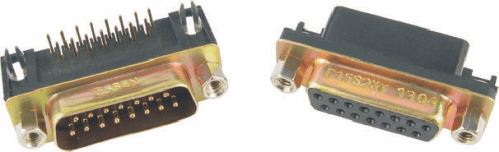
D-Subminiature connectors are standard electrical components used to transmit data, power, and signals between electronic devices. You can easily identify them by their unique D-shaped metal shield. This precise shape guarantees that users can only insert the connector in the correct orientation.
These electronic connectivity solutions provide a robust interface for diverse industrial systems. By preventing incorrect insertions, the D-shaped shield eliminates potential damage to delicate pins.
- History and Evolution of D-Sub Connectors
Engineers first developed the D-subminiature connector in the 1950s. At that time, these components were considered incredibly small, which earned them the “subminiature” title.
Over the decades, technology evolved dramatically. However, the fundamental design of these electronic connectors remained highly effective. Today, manufacturers have upgraded the materials and shielding to meet rigorous modern standards. They now serve as essential signal transmission connectors for highly complex automation systems.
- Components of a D-Sub Connector
A standard D-sub device consists of several carefully engineered parts. Understanding these components helps explain their durability.
- Metal Shell: The D-shaped housing provides structural integrity and electromagnetic shielding.
- Pins and Sockets: The male housing holds the pins, while the female housing contains the sockets. They transmit the actual electrical current.
- Insulator block: This thermoplastic material holds the pins securely in place and prevents short circuits.
- Mounting hardware: Thumbscrews or jack screws secure the connection tightly to prevent accidental disconnection.
How Do D-Sub Connectors Work Step by Step?
- How Do D-Sub Connectors Work?
The operation of D-Sub Connectors relies on direct mechanical and electrical contact. When a technician plugs the male connector into the female receptacle, the metal pins slide perfectly into the receiving sockets.
This tight physical connection allows electrical current or data signals to flow without interruption. The surrounding metal shell establishes an electrical ground. This grounding process blocks external electromagnetic noise, ensuring clean and reliable industrial communication connectors.
- Pin Configuration and Signal Transmission
The true power of these devices lies in their connector pin configuration. Each pin handles a specific task, such as transmitting data, receiving data, or providing a ground connection.
For example, serial communication protocols assign distinct roles to individual pins. This organized signal transmission guarantees accurate data flow between heavy machinery and control systems. Proper pin alignment prevents data loss and maintains high-speed communication in critical industrial environments.
Common Types and Uses
- Types of D-Sub Connectors (DB9, DB15, DB25, etc.)
You will find many D-sub connector types available for different industrial needs. The number after the “DB” usually indicates the pin count.
- DB9 connector: Features 9 pins and frequently supports serial communication networks.
- DB15 connector: Contains 15 pins, often used for video output or specialized game ports.
- DB25 connector: Uses 25 pins for parallel port connections and complex audio equipment.
- High-Density variants: Pack more pins into a standard shell size for advanced electrical D-Sub connectors.
- Common Industrial Applications
Engineers rely on these components across multiple sectors. Their rugged design makes them perfect D-sub connector applications in harsh environments.
Typical use cases include manufacturing plants where vibration is constant. You will see them heavily utilized as industrial automation connectors bridging programmable logic controllers (PLCs) with motor drives. They also serve as dependable control panel connectors in power distribution units. Furthermore, custom D-sub cable assemblies connect sensitive testing equipment in modern laboratories.
Why Choose D-Sub Technology?
- Benefits of D-Sub Connectors
Using D-Sub Connectors provides numerous advantages for OEMs and maintenance engineers.
- Durability: The sturdy metal housing withstands significant physical stress and vibration.
- Interference Protection: Superior EMI shielding protects sensitive data networks.
- Cost-Effective: They offer exceptional performance at a highly competitive price point.
- Versatility: They handle both power and data transmission simultaneously.
- Secure Locking: Jack screws prevent accidental unplugging during critical operations.
- How to Select the Right Connector
Choosing the right connector requires careful evaluation of your project requirements. You must consider the environment, the electrical load, and the necessary pin count.
First, determine if you need standard or high-density electronic connector products. Next, evaluate the environmental hazards. If the equipment operates near moisture or heavy dust, select rugged industrial connectors with high IP ratings. Finally, partner with a reliable manufacturer. Essen Deinki stands out as a trusted Indian manufacturer offering premium industrial connector solutions built for demanding applications.
- Future of D-Sub Connectivity in Industrial Automation
Despite the rise of USB and Ethernet, D-sub technology remains highly relevant. Industries value stability and legacy compatibility above all else.
Many automated systems require upgrades without replacing the entire infrastructure. Therefore, these connectors will continue bridging the gap between legacy hardware and modern industrial networks. Manufacturers continuously innovate these electronic connectors by integrating better insulation materials and enhanced alloy contacts.
Secure Your Industrial Connections Today
Finding the right hardware is crucial for maintaining seamless industrial operations. D-Sub Connectors deliver the reliability, durability, and signal integrity required for modern automation and control systems. Choosing high-quality components minimizes downtime and maximizes productivity.
As a trusted Indian manufacturer, Essen Deinki provides exceptional engineering expertise and industrial-grade quality. Whether you need standard configurations or customized electronic components, we deliver application-focused solutions. Find the Right D-Sub Connector for Your Application today. Contact Essen Deinki for Reliable Connectivity Solutions and Get Expert Guidance on Industrial Connector Selection.
Frequently Asked Questions (FAQs)`
What are the primary applications of D-Sub Connectors?
D-Sub Connectors primarily serve in industrial automation, telecommunications, and control panels. They provide highly reliable connections for data transmission and power distribution. Their rugged metal housings make them ideal for environments requiring protection against electromagnetic interference and physical vibrations.
How do you determine the right connector pin configuration?
You determine the right connector pin configuration by evaluating your specific system requirements. Count the required data and power lines for your device. For simple serial communication, a DB9 connector works perfectly. Complex parallel connections might require a DB25 configuration.
Why do industrial systems still use these older connectors?
Industrial systems continue using these electronic connectors because they offer unmatched mechanical stability. The secure screw-locking mechanism prevents accidental disconnections caused by machinery vibration. Furthermore, their superior electromagnetic shielding ensures clean signal transmission in noisy manufacturing environments.
Are customized D-sub cable assemblies available for specific needs?
Yes, manufacturers offer customized D-sub cable assemblies tailored to specific industrial requirements. You can specify precise cable lengths, shielding types, and specialized pin layouts. This flexibility ensures complete compatibility with unique control panels, legacy equipment, and modern automation systems.