

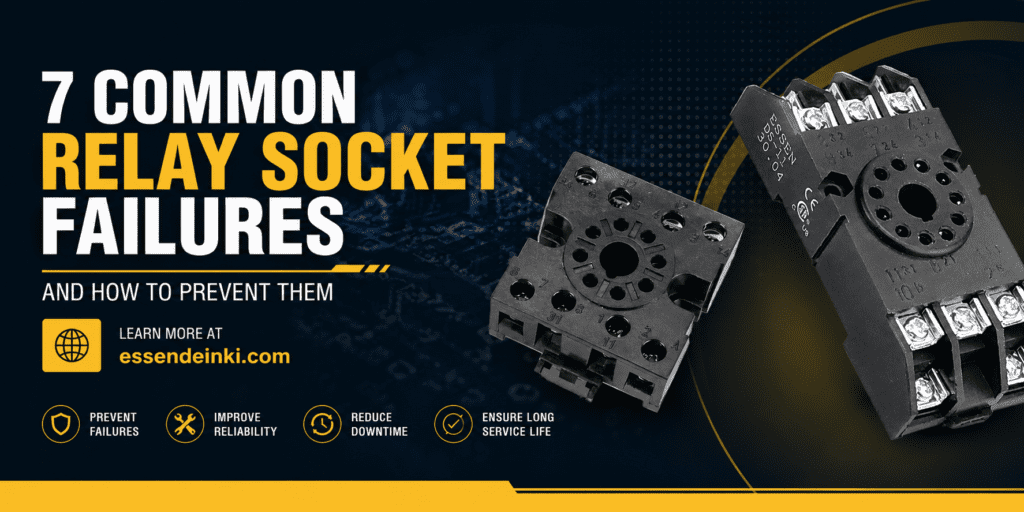
Even a small relay socket failure can disrupt an entire automation system, cause unexpected downtime, and increase maintenance costs. Understanding the most common relay socket problems and knowing how to prevent them can significantly improve equipment reliability and operational efficiency.
A Relay Socket is a small component, but it plays a big role in industrial control panels. It holds the relay in place and ensures secure electrical connections. When it fails, machines stop, production slows, and repair bills climb fast.
This guide explains the seven most common relay socket failures. You’ll learn their causes, warning signs, troubleshooting tips, and proven prevention methods. The content is written for engineers, maintenance teams, panel builders, OEMs, and industrial buyers across India.
Quick Answer: What Are the Most Common Relay Socket Failures?
The most common relay socket failures include loose electrical connections, overheating, corrosion, wiring errors, mechanical wear, overloading, and poor-quality components. These issues cause intermittent faults, panel downtime, and relay damage. Regular inspection, correct relay socket wiring, and high-quality components prevent most failures and extend the service life of your industrial control systems.
Understanding Relay Socket Functions
A relay socket—also called a relay base socket or relay holder—connects a relay to your control circuit. It allows quick relay installation and easy replacement without rewiring the panel.
Relay sockets are core control panel components. They support automation systems, machinery, and panel board components across many industries. Common relay socket applications include motor control, signal switching, and protection circuits.
There are several relay socket types, including 8-pin and 11-pin models. Choosing the right industrial relay socket depends on load, pin count, and mounting style. Now, let’s explore why these components fail.
Why Do Relay Sockets Fail?
Relay sockets fail due to electrical stress, environmental exposure, and poor installation. Heat, vibration, moisture, and overload all reduce relay performance over time. Low-quality electrical relay components fail even faster.
The good news? Most failures are predictable and preventable. Here are the seven biggest culprits.
Failure #1 – Loose Electrical Connections
Loose connections are the most common relay socket problem. Over time, vibration and thermal cycling loosen terminal screws. This creates poor electrical connections and arcing.
Warning signs:
- Intermittent relay operation
- Flickering indicator lights
- Burn marks near terminals
Prevention: Tighten all terminals during relay installation. Re-check torque during routine maintenance. Use spring-clip sockets in high-vibration areas.
Failure #2 – Overheating and Thermal Damage
Excess heat is a silent killer for relay sockets. High current and loose contacts increase resistance, which raises temperature. This melts plastic and weakens the socket body.
Warning signs:
- Discolored or melted housing
- A burning smell inside the panel
- Frequent relay failures in one spot
Prevention: Choose flame-retardant thermoplastic sockets. Ensure proper panel ventilation. Match the socket’s current rating to your load.
Failure #3 – Corrosion and Moisture Exposure
Moisture and corrosive air damage metal contacts. Corrosion increases resistance and breaks the electrical path. This is a major issue in humid and coastal regions of India.
Warning signs:
- Green or white deposits on contacts
- Erratic relay switching
- Higher contact resistance readings
Prevention: Use IP-rated enclosures. Apply contact protection where needed. Keep panels sealed against dust and water.
Failure #4 – Improper Relay Socket Wiring
Wrong relay socket wiring causes many early failures. Reversed terminals, undersized wires, and poor crimps all create weak points. These mistakes also create safety risks.
Warning signs:
- Relay does not activate correctly
- Heat at the wire-terminal joint
- Tripped breakers after installation
Prevention: Follow the manufacturer’s wiring diagram. Use correctly sized wires and quality crimp terminals. Always verify polarity before powering up.
Failure #5 – Mechanical Wear and Tear
Every relay socket has a limited number of insertion and withdrawal cycles. Repeated relay swaps wear down the contact springs. Worn contacts lose grip and create loose joints.
Warning signs:
- Relays feel loose in the socket
- Low insertion or withdrawal force
- Frequent intermittent faults
Prevention: Choose sockets with strong retention clips. Avoid unnecessary relay removal. Replace worn sockets before they fail.
Failure #6 – Overloading and Excess Current
Running a socket beyond its rated current damages the contacts quickly. Overloading generates heat, pitting, and contact welding. This is a common electrical troubleshooting issue in heavy machinery.
Warning signs:
- Sockets running hot under load
- Pitted or welded contacts
- Repeated nuisance tripping
Prevention: Always review load capacity before installation. Add protection devices for high-load circuits. Never exceed the rated current of the relay socket.
Failure #7 – Poor Quality Components
Low-cost, low-quality sockets fail far sooner than tested ones. Cheap plastics melt, weak springs lose tension, and thin metals corrode fast. Poor manufacturing quality affects entire automation control systems.
Warning signs:
- Early or repeated failures
- Inconsistent contact behavior
- Brittle or discolored housing
Prevention: Buy from trusted suppliers. Look for sockets that meet EN 60947-5-1 and IEC 947-5-1 standards. Essen Deinki manufactures relay sockets that meet these international quality benchmarks.
Relay Socket Troubleshooting Table
Use this quick reference to diagnose and prevent common failures.
| Failure Type | Common Cause | Warning Signs | Prevention Method |
| Loose Connections | Vibration, thermal cycling | Flickering, arcing, burn marks | Tighten terminals, re-check torque |
| Overheating | High current, loose contacts | Melted housing, burning smell | Use rated, flame-retardant sockets |
| Corrosion | Moisture, corrosive air | White/green deposits, erratic switching | Seal panels, use IP-rated enclosures |
| Wiring Errors | Wrong terminals, poor crimps | Relay won’t activate, hot joints | Follow wiring diagram, verify polarity |
| Mechanical Wear | Repeated insertions | Loose relay, low grip force | Limit swaps, use strong clips |
| Overloading | Excess current | Hot sockets, welded contacts | Respect current rating, add protection |
| Poor Manufacturing Quality | Cheap materials | Early failure, brittle housing | Buy certified, quality components |
Preventive Maintenance Best Practices
Smart maintenance keeps your control panel components reliable. A planned schedule prevents most relay socket failures.
| Maintenance Task | Recommended Frequency |
| Visual Inspection | Monthly |
| Contact Cleaning | Quarterly |
| Tightening Connections | Every 3–6 months |
| Load Testing | Every 6 months |
| Relay Replacement Assessment | Annually |
Follow this schedule to reduce downtime and protect your equipment. Adjust timing for harsh or high-load environments.
Relay Socket Maintenance Checklist
Keep this checklist handy for every panel inspection:
- Connection inspection – Check and tighten all terminals
- Heat monitoring – Look for discoloration or hotspots
- Moisture protection – Confirm seals and enclosures are intact
- Wiring verification – Check polarity, crimps, and wire size
- ✅Load capacity review – Confirm current is within rating
- ✅Component quality checks – Inspect housing and contact condition
- ✅Scheduled preventive maintenance – Log every inspection and action
How to Choose a Reliable Relay Socket
The right relay socket depends on your application. Match the pin count, current rating, and mounting type to your panel needs.
Choose based on these factors:
- Pin configuration – Select 8-pin or 11-pin relay socket types based on your relay.
- Mounting style – Pick DIN-rail or surface-mount models for your layout.
- Material quality – Insist on flame-retardant thermoplastic for safety.
- Compliance – Look for EN 60947-5-1 and IEC 947-5-1 certified products.
Choose a heavy-duty industrial relay socket if reliability matters more than upfront cost. Quality components reduce long-term maintenance spend. Explore tested relay socket solutions built for demanding environments.
Why Quality Matters in Industrial Applications
In automation systems, one weak component can stop an entire line. A failed socket can halt production, damage a relay, or create a safety hazard. That’s why electrical reliability starts with quality electrical relay components.
Essen Deinki has manufactured precision industrial electrical equipment since 1964. The company operates across three centres in Chandigarh with 60 years of engineering expertise. Its relay sockets use flame-retardant thermoplastics and meet international standards.
For panel builders, OEMs, and plant managers in India, choosing a trusted industrial relay socket supplier is a smart investment. Reliable parts mean fewer breakdowns and lower costs.
Conclusion: Build More Reliable Control Panels
A reliable Relay Socket keeps your automation systems running smoothly. By preventing loose connections, overheating, corrosion, wiring errors, mechanical wear, overloading, and poor-quality parts, you protect both uptime and budget.
Apply the maintenance checklist, follow the inspection schedule, and choose certified components. These simple steps reduce downtime and extend relay life.
Ready to improve control panel reliability today? Choose high-quality relay socket solutions and reduce downtime with reliable components. Contact Essen Deinki for expert product guidance and technical support tailored to your industrial automation needs.
Frequently Asked Questions (FAQs)
- What is the most common cause of relay socket failure?
Loose electrical connections are the most common cause. Vibration and heat slowly loosen terminal screws, creating arcing and intermittent faults. Regular tightening, correct torque, and spring-clip sockets in high-vibration areas help prevent this problem and keep your control panel running reliably.
- How often should I inspect a relay socket?
Inspect each relay socket visually every month and tighten connections every three to six months. Perform load testing twice a year. In humid, dusty, or high-load environments, increase the frequency. Consistent inspections catch small issues before they cause costly downtime.
- How do I choose the right industrial relay socket?
Match the pin count, current rating, and mounting style to your relay and panel. Choose flame-retardant thermoplastic models that meet EN 60947-5-1 and IEC 947-5-1 standards. For demanding applications, select certified products from trusted suppliers like Essen Deinki for proven reliability.
- Can poor wiring damage a relay socket?
Yes. Improper relay socket wiring causes early failures. Reversed terminals, undersized wires, and weak crimps create heat and weak points. These faults can trip breakers and damage relays. Always follow the wiring diagram, use correctly sized wires, and verify polarity before powering up.