

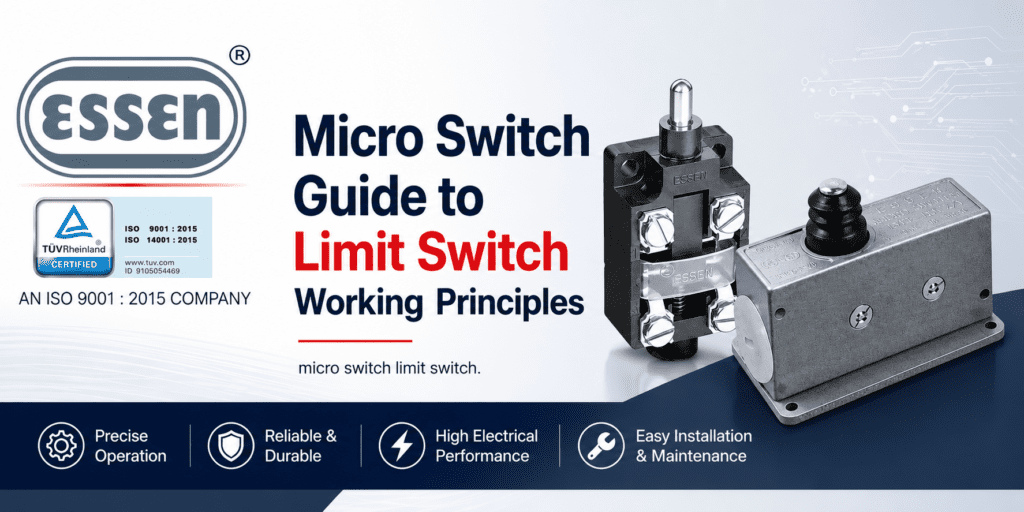
A Limit Switch operates using a snap-action mechanism that opens or closes an electrical circuit when a specific physical force is applied to its actuator. This rapid movement ensures precise, highly reliable switching for industrial machinery, safety controls, and automated manufacturing systems.
Industrial automation requires absolute precision to function correctly. A fraction of a millimeter or a split-second delay can disrupt an entire production line, leading to costly downtime or safety hazards. Engineers and procurement managers must rely on dependable electro-mechanical components to maintain seamless operations.
The Limit Switch serves as the backbone of countless control systems across manufacturing facilities. These small but powerful devices detect the presence or absence of an object, monitor mechanical limits, and trigger essential safety protocols. Understanding how these switches function helps facility managers make informed decisions when upgrading or maintaining their equipment.
This comprehensive guide breaks down the working principle of a micro switch limit switch. You will learn about the internal snap-action mechanism, the specific components that drive its reliability, and how to choose the right switch for your industrial applications in India.
What is a Micro Switch Limit Switch?
A Limit Switch is a highly sensitive electrical switch activated by minimal physical force. It acts as a sensor within mechanical systems. When a moving machine part makes physical contact with the switch’s actuator, the switch alters the state of an electrical circuit.
These switches are categorized by their “snap-action” capability. This means the transition from open to closed (or vice versa) happens instantaneously, regardless of how slowly the external force is applied. This rapid response prevents electrical arcing and extends the operational life of the switch.
Manufacturers across India utilize these components in everything from heavy duty conveyor belts to delicate medical devices. They serve a dual purpose: enabling automated processes to run without human intervention and acting as failsafes that cut power when machinery exceeds safe operating limits.
The Core Working Principle
To understand the working principle of a micro switch limit switch, you must look inside its casing. The operation relies on a delicate balance of mechanical tension and electrical conductivity.
The Snap-Action Mechanism Explained
The defining feature of a micro switch is the snap-action mechanism. This system uses a precisely calibrated tension spring. When an external object presses against the actuator, it applies pressure to this spring.
The spring absorbs this pressure until it reaches a specific, engineered threshold known as the tipping point. Once this point is breached, the spring releases its stored energy instantly. This forces the internal electrical contacts to snap together or push apart at high speed.
Because the movement of the contacts is independent of the speed of the actuator, the switch guarantees a consistent, rapid electrical connection or disconnection. When the external pressure is removed, the spring immediately snaps the contacts back to their original resting state.
Inside the Switch: Key Components
Several crucial parts work in unison to execute this working principle efficiently:
- The Actuator: This is the physical interface of the switch. It can be a simple push button, a roller lever, or a hinge lever. The actuator receives the external mechanical force and transfers it to the internal mechanism.
- The Tension Spring: A flat, specially shaped piece of metal that stores mechanical energy. It drives the snap-action movement.
- The Contacts: These are conductive metal points that open or close the electrical circuit. They are typically configured as Normally Open (NO) or Normally Closed (NC).
- The Terminals: These external connection points link the micro switch to the broader electrical circuit of the machine.
- The Housing: The durable outer casing protects the delicate internal components from dust, moisture, and mechanical damage.
Primary Configurations: Normally Open vs. Normally Closed
When selecting a micro switch limit switch, you must determine the appropriate electrical configuration for your specific use case. The working principle applies differently based on how the contacts rest by default.
Normally Open (NO) Configuration
In a Normally Open switch, the electrical circuit is disconnected while the switch is resting. The electrical current cannot flow. When a physical force presses the actuator, the snap-action mechanism forces the contacts together, closing the circuit and allowing power to pass through. Choose a Normally Open switch if you need a machine to activate only when a specific mechanical condition is met.
Normally Closed (NC) Configuration
In a Normally Closed switch, the circuit remains complete and active during its resting state. Electricity flows freely. When the actuator is pressed, the internal mechanism snaps the contacts apart, breaking the circuit and stopping the flow of power. Choose a Normally Closed switch for safety systems where you need to instantly cut power if a machine part travels past its safe physical limit.
Why Industrial Automation Relies on These Switches
Indian manufacturing sectors require rugged, dependable components to maintain output targets. The Limit Switch provides several distinct advantages that make it indispensable for plant operations.
High Precision and Repeatability
Industrial processes require machines to perform the exact same action millions of times without deviation. Because the snap-action mechanism relies on a fixed physical tipping point, the micro switch will always activate at the precise same actuator position. This repeatability ensures consistent product quality and reliable machine timing.
Durability in Harsh Environments
Factories often expose components to intense vibrations, fluctuating temperatures, and airborne debris. High-quality micro switches are housed in reinforced plastics or die-cast metals. This robust construction protects the internal spring and contacts, allowing the switch to perform flawlessly even in challenging industrial environments.
Cost-Effective Reliability
Compared to complex optical sensors or proximity switches, mechanical limit switches are incredibly cost-effective. They are simple to install, easy to troubleshoot, and require minimal maintenance. Their mechanical nature means they are immune to electrical interference, making them a stable choice for heavy machinery.
Choosing the Right Switch for Your Operations
Selecting the correct Limit Switch requires careful evaluation of your specific machinery. Applying the wrong switch can lead to premature component failure. Consider the following criteria when sourcing parts for your facility.
Choose a roller lever actuator if the moving object will slide past the switch at an angle. The roller reduces friction and prevents wear on both the switch and the machine part.
Choose a pin plunger actuator if the mechanical movement is directly linear and presses straight down onto the switch.
Always verify the electrical rating. Ensure the switch can handle the voltage and current requirements of your specific circuit. Overloading a micro switch will quickly destroy the internal contacts. Finally, check the Ingress Protection (IP) rating. If your manufacturing environment is exposed to heavy dust or liquids, you must select a switch with a high IP rating to prevent internal short circuits.
Secure Your Electrical Components with Essen Deinki
Understanding the working principle of your components is only the first step. Securing high-quality, reliable parts is what keeps your business moving forward.
Since 1964, Essen Deinki has been a trusted manufacturer of electrical and electronic components in India. With over 10,000 square meters of production space across three centers in Chandigarh, we deliver precision industrial components worldwide. Our commitment to continuous research and development is backed by our ISO 9001:2015 and ISO 14001:2015 Certifications.
When you need highly reliable micro switches, limit switches, or complex electro-mechanical connectors, our team has the engineering expertise to support your goals. We manufacture top-notch components designed to withstand the rigorous demands of modern industrial automation.
Ready to upgrade your control systems with industry-leading components? Contact Essen Deinki today to speak with our technical sales team and find the perfect switching solutions for your facility.
Frequently Asked Questions (FAQs)
What is the primary difference between a micro switch and a standard limit switch?
A micro switch is defined by its internal snap-action mechanism, which requires very little physical force and travel distance to activate. A standard limit switch often refers to a larger, heavier-duty housing that may contain a micro switch inside, designed specifically to withstand severe mechanical impacts in heavy industrial environments.
How long does a Limit Switch last?
The lifespan of a high-quality micro switch depends heavily on the electrical load and operating environment. Mechanically, they are typically rated for anywhere between 1 million to 10 million cycles. However, carrying high electrical currents can reduce the electrical lifespan due to contact wear over time.
Can these switches handle high-voltage industrial applications?
Micro switches are available in a wide range of electrical ratings. While many are used for low-voltage control circuits, specific models are engineered with heavy-duty contacts to handle higher industrial voltages and currents. Always consult the manufacturer’s datasheet to ensure the switch matches your electrical load requirements.
Why does my micro switch occasionally fail to trigger the circuit?
Failure to trigger is usually caused by mechanical wear on the actuator, loss of tension in the internal spring, or a build-up of carbon and oxidation on the internal electrical contacts. If your switch operates in a dusty or humid environment without an adequate IP rating, debris may have penetrated the housing and disrupted the connection.